Global News

Showing posts with label aspergers. Show all posts

April 30, 2013

The reality of finding a job with autism


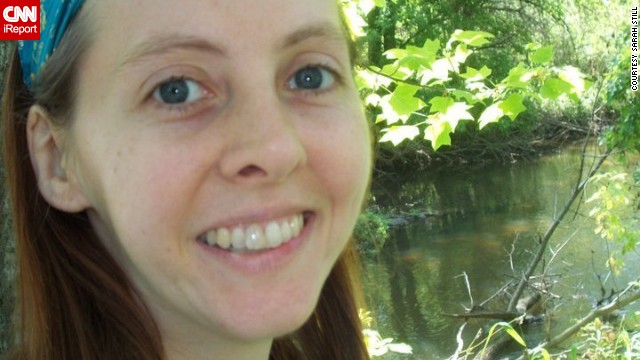
Sarah Still has Aspergers and has spent years working a variety of jobs that don't seem to fit her needs.
By Jareen Imam, CNN

Editor's note: As we wrap up Autism Awareness Month on Tuesday, visit the CNN Facebook page for a live discussion on autism and the workplace at 2:30 p.m. ET. iReporters and experts will be taking questions and sharing their experiences.

STORY HIGHLIGHTS
  • Sarah Still is on the autism spectrum and has tried for years to find a job that suits her
  • More organizations are specializing in placing those with autism into jobs
  • Experts explain why it is difficult for those on the spectrum to find jobs on their own
  • Support at work can help those on the spectrum stay in jobs longer
(CNN) -- Smiling is something 30-year-old Sarah Still constantly has to remind herself to do, especially when she is going into a job interview.
Still has Asperger's, a high-functioning form of autism. For the past 10 years, she has experienced the highs and lows of being on the autism spectrum while trying to work in professional settings.
It is not as though Still cannot get a job -- in fact, her resume is full of them, ranging from room attendant at Yellowstone National Park to receptionist at a massage parlor. It's keeping the jobs that has been the issue... more >

December 10, 2012

My teenage son's journey to understanding his little brother's autism

Rowena Entwistle


Matthew is almost 9 years old. He is a very special boy with autism. Yesterday he said to me that he is my helper after I told him that he makes me very happy whenever I’m sad or feeling tired. He held my face and smiled the sweetest smile and told me, “Mummy, I am your helper. I make you happy.”

Those are special moments between Matthew and me that I will always cherish. There are also special moments that happen between Matthew and his siblings – Tim and Regina. But it’s more exasperation rather than times of inspiration that Matthew often shares with them, especially with Tim, his older brother. Tim is 13.

Read more >

December 9, 2012

Should a teen with Asperger Syndrome try to be "normal?"


Lisa Jo Rudy

Question: Should a Teen with Asperger Syndrome Try to Be "Normal?"
I'm worried about how my bright, funny, imaginative 11-year-old daughter with Aspergers is going to cope with the pressures of middle school. That is a difficult age for any child and most people don't accept her as she is. My husband thinks we should focus on making her more acceptable to the majority, but I don't think she should have to change who she is. I haven't heard from anyone who has been through those middle & high school years and I am terrified!!

Answer: Hi Julia,
You have a raised a very tough but good question! This is a common fear that parents of spectrum kids have. Middle school, as we all know, is cruel to everyone, and especially to those who are different. How do you let your kid be who they are while still protecting them so they don't emerge traumatized?

Read more >

December 8, 2012

Talking about "it"

Kristi Sakai

As the experts recommend, I’ve kept an age-appropriate ongoing dialogue with my children about their bodies and sex since they were very young. Plus, we live on a farm (imagine my pride when I was informed my son had drawn a picture of where eggs come from, including details that involved a hen and a rooster ... Need I say more?)

I thought I was a pretty hip mom until confronted with a son going through puberty when I suddenly began blushing and stammering. My husband, Aspergery soul that he is, wasn’t much help despite my pleas for him to “Have a talk with your son” (heavy on the YOUR in the hopes this would inspire him to take on this responsibility). His response was, “He’ll figure it out.” “Well, yeah!” I lamented, “That’s what I’m afraid of!”

Read more >

December 7, 2012

First autistic Presidential appointee speaks out


Steve Silberman

When Ari Ne’eman walked onstage at a college campus in Pennsylvania in June, he looked like a handsome young rabbi presiding over the bar mitzvah of a young Talmudic scholar.

In truth, Ne’eman was facilitating a different kind of coming-of-age ceremony. Beckoning a group of teenagers to walk through a gateway symbolizing their transition into adult life, he said, “I welcome you as members of the autistic community.” The setting was an annual gathering called Autreat, organized by an autistic self-help group called Autism Network International.  

December 6, 2012

What in the World is Going On - December 2012 Edition

Written by Maureen Bennie
Principal investigator Johanna Montgomery, from Auckland University’s Centre for Brain Research in New Zealand, has discovered a genetic mutation in people with autism that cuts communication between brain cells to about one-tenth of normal levels. The study found that a protein which helps brain cells transfer data through neurological pathways called synapses was mutated in autism sufferers. This could be a reason for their cognitive and behavioural difficulties. Published in the October Edition of Journal of Neuroscience, Johanna Montgomery said the mutated protein called Shank3 provided exciting possibilities in the search for autism treatments. Even with this new discovery, treatment is still years away.

A new study released in the journal Child Development found that babies with autism don’t show outward signs of the neurological disorder in the first six months of life, but after that time develop differently than other children. “These findings indicate that not all children with ASD may be detected at the same age,” wrote the researchers, from Kennedy Krieger, Johns Hopkins University and Harvard Medical School. Because of this, the researchers suggest physicians administer general developmental screening by age 1, followed by autism screening at 14 months and at regular intervals through the preschool years. READ MORE >

December 5, 2012

Top 10 snappy answers to annoying comments about autism


Lisa Jo Rudy

If you're a parent with a child on the spectrum, you've probably responded to the same annoying remarks and questions a thousand times. Here's a handy list of responses that...you'll probably never use out loud (but are fun to imagine using)!

1. He can’t be autistic -- he can talk! (or make eye contact, smile, engage)
And yet, amazingly, he’s still autistic! Y’see, autism is a spectrum disorder, and that means …

2. Oh, she must be SO good at math! (or science or music)
Actually, her great talent is in memorizing and reciting lines from Sponge Bob videos! (Or those annoying Thomas the Tank Engine songs!)

Read more > 

December 4, 2012

Early therapy can change brains of kids with autism


Miriam Falco
As the number of children with autism has risen dramatically over the past couple of decades, experts have learned that the earlier a child gets diagnosed, the earlier specialized therapy can be initiated, which can significantly improve outcomes.

Now researchers have been able to show that a particular type of behavioral therapy called the Early Start Denver Model (ESDM) not only improves autism symptoms, but actually normalizes brain activity and improves social behavior.  Read more >

December 3, 2012

Tips to help you plan for your autistic child's future


Lisa Jo Rudy

Once your child with autism is past the age of 18, he is an adult. At 21, the IDEA (Individuals with Disabilities Education Act) no longer applies. Your child is no longer your legal dependent, and fewer options are available for education, therapy, and parental support. What's more, the parents of grown children with autism may be older, and concerned about what will happen to their adult child once they're gone.

It can be tricky, though, to plan for an adult on the autism spectrum. Adults with autism can be complicated people, and many are bright and capable. Yet with all their intelligence and ability, some adults with autism have a very tough time handling the day to day challenges of paying bills, cleaning house, cooking meals, and all the details that go with managing a household.  Read more >

December 2, 2012

Redefining the workplace for teens and adults with autism


Lisa Jo Rudy

Since when have passion, meticulous attention to detail, and lack of interest in office gossip been problems in the workplace? Since the workplace was defined as a 9-5 social setting! It's true that offices -- and the stock rooms at Walmart -- are "typical" work settings. But autistic people aren't typical. And neither are the careers for which they're ALREADY good candidates.

He Just Can't See the Forest for the Trees: It's a common trait among autistic people: they see the parts instead of the whole. It's a problem in some settings, but a terrific attribute if you're looking for... Read more >

December 1, 2012

How can I help my autistic teen feel "cool"?


by Lisa Jo Rudy

Question: How Can I Help My Autistic Teen feel "Cool"? How can I help my autistic teen feel like he's cool? At age 16, my son with Asperger Syndrome is trying to develop a 'cool' persona, but he is not very adept. If he could just learn small talk, he would be miles ahead of where he is now. Please help me find some way to help him.

Answer: From Dr. Robert Naseef Each season of life for any child, now adolescence for your son, brings on a new season of parenthood for mothers and fathers. Autism or Asperger’s further complicates the transition

Read more >

November 30, 2012

Planning for your child's future


Ernst O. Vanbergeijk, Ph.D., M.S.W., & Paul K. Cavanagh, Ph.D., M.S.W.

As administrators of two transition programs, we are often asked by parents “How can I best help my child transition to postsecondary education?” Or “when should I start working with my child on preparing to go to college or vocational training?” A variation on this theme is when we meet parents of young children with disabilities, and they remark to us, “Oh, we don’t need to talk to you yet. Our kids are really young.” A child is never “too young” when thinking about or planning for his or her future and optimizing their chances of having a smooth transition to postsecondary education....

Read more > 

November 29, 2012

Asperger's survival guide: Distortions of the truth


Chris & Gisela Slater-Walker

Chris & Gisela Slater-Walker are a married couple where one of the partners has Asperger's Syndrome. We hope to provide a positive message about Asperger's Syndrome within marriage, and to show that it is possible to maintain a functional and successful relationship. The following is part of their multi-chapter "Asperger's survival guide"

Distortions of the Truth
  • Sarcasm is when someone says one thing but means the opposite. For example, in response to hearing someone burp, someone else might say "how polite". The easiest way of picking up on sarcasm is by listening to tone of voice. You may need to defend yourself against sarcasm at times and this will be covered in following chapters.
  • Not knowing the truth is a common reason why people might distort it.

Read more >

November 28, 2012

When do you take bullying seriously?


Rachel McCumber

Daniel was tense all afternoon, last Tuesday. At first, I thought it was because he had struggled with his morning routine that morning, leaving the house without a shower or lunch. However, that evening as he stood in the kitchen making the next day’s lunch, he burst out in angry tears.

“I don’t know what’s wrong with me today. Everything is upsetting me and I just feel like crying!” he exclaimed.

I paused my piano playing to turn towards the kitchen.

“Don’t worry Daniel, in the grand scheme of life, a missed shower and lunch isn’t a game changer.” I reassured him.

“It’s not that!” he replied quietly, “Nobody likes me. They think I am weird.”

I waited. He seemed to be struggling, so I walked over to the kitchen and asked him, “What do they say?”

“That I am gay. That I have a PSP.” he blushed.

“What is a PSP?” I asked.


Read more >

November 27, 2012

Thoughts and ideas as a woman with ASD


Ruth Elaine Hane

The needs of girls and women with autism, different from those of neurotypicals, have recently caught the attention of the autism community and the public, in general. Girls with autism are a minority population frequently exhibiting dissimilar behaviors than boys who are diagnosed five to one with autism spectrum disorder (ASD). Girls in our culture are encouraged to “act like ladies” and blend in, whereas “boys will be boys” is often given as the reason for males who may have behavioral issues. Teachers, care givers, professionals and parents allow more latitude and tolerance for boys and men who are disruptive and act out. Since the media and toy makers offer mostly scripted play for girls, girls who have other more active interests may be denied an opportunity to pursue these and may turn inward, often becoming depressed. If we include these compliant girls who withdraw, figuratively speaking, by reading in a corner and do not openly express their preferences, the ratio of boys to girls diagnosed with ASD might change considerably. Read more >

November 23, 2012

What in the World Is Going On, November 2012 Edition


Written by Maureen Bennie  |  Autism Awareness Centre

Temple Grandin, the most famous person in the world with autism, recently had a brain scan done. She has exceptional nonverbal intelligence and spatial memory. Temple’s brain had a host of structural and functional differences compared with the brains of the control group in this comparison study.

Temple was 63 at the time of the brain scan. Her brain volume was found to be significantly larger than that of three neurotypical controls matched on age, sex and handedness. Some children with autism have abnormally large brains, though researchers are still working out how head and brain size changes across development. It was interesting to find that many of Temple’s strengths like memory and visual perception correlate with her brain differences.

Holiday travel season is about to begin and for many parents that equals great stress, especially when it comes to flying. Over the past two years, Washington Dulles International Airport, along with airports in Atlanta; Boston; Bridgeport, Conn.; Manchester, N.H.; Philadelphia; and Newark, have offered hundreds of parents and autistic children “mock boarding” experiences, allowing them to practice buying tickets, walk though security lines and strap themselves into a plane that never leaves the gate. READ MORE >>

November 21, 2012

Autism in the News


  1. The Autism Project: Adults need help, too

    Toronto Star
    They are called the lost generation, adults with autism who are ... When they were children, no one knew how to treat autistic brains and now ...
  2. VODAFONE Supports Autism Awareness

    Peace FM Online
    The Vodafone World of Difference Project which is aimed at bringing together participants to gear up for a charitable event has once again ...
  3. Kelly Preston Talks Autism And Eating Organically On The Doctors

    Look To The Stars
    The Emmy-winning daytime series, The Doctors, welcomes Hollywood actress, mother, and wife of actor John Travolta, Kelly Preston, in an ...
  4. The Autism Project: Teens with autism face uncertain fate

    Toronto Star-2012-11-16
    A Thornhill couple is advised by provincial officials to leave their 19-year-old autistic son, who wears diapers, at a homeless shelter if they can't ...
  5. The Autism Project: Mothers with ASD ask why scientists are missing ...

    Toronto Star-2012-11-17
    In 1943, the ghost of Sigmund Freud still stalked the hallways of psychiatry. So when Austrian-born child psychiatrist Leo Kanner wrote the first ...
  6. Students With Autism Choose STEM Majors, if They Go to College

    Education Week News (blog)-2012-11-20
    The results of a new study confirm that students with autism spectrum disorders gravitate toward majors in science, technology, engineering, ...
  7. Autism FAQ: “High Functioning or Low Functioning?”

    San Francisco Chronicle (blog)-by Laura Shumaker
    “It's a really (unintentionally) crappy question to ask,” says Angela Morris, “because, I've found, people ask it to comfort themselves; i.e.; “well at ...
  8. Autism Hearing? Let yourself be heard

    Left Brain Right Brain
    The panel, chaired by Rep. Darrell Issa (D-Calif.), has invited witnesses from the National Institutes of Health and the Centers for Disease ...

November 16, 2012

Autism: a cyber-bullying story with a twist

Cell Phone 
Laura Shumaker  — Writer and Autism Advocate

“U are a loser, u have no friends,” read the text that prompted Matthew to call 911.

He called me as I was driving to meet a friend for lunch and told me about the text.

“I feel a bit sad and a bit scared,” he said quietly.

Matthew, as many of you know, is 26 years old and has autism. He lives in a community near Santa Cruz with other adults with developmental disabilities. When people ask me “how severe” he is I take a deep breath and tell them they would really like Matthew. He’s friendly and earnest, and will ask which version of the song “Oh Pretty Woman” you like best before he even said hello. He has a hard time making and keeping friends but has gotten better at it as he matures, and the friends that he has collected over the years are loyal and true-the best people I know. Still, Matthew opens the phonebook regularly and looks up people that he remembers from childhood and calls. If he get’s through, it’s usually to the person’s mother.

So when Matthew told me about the mean text message, and asked me to have the texter arrested, I thought it might be from a person that Matthew had called over and over and over again, possibly a wrong number, and left one too many messages.

“Do you want to hang out? Call me back when you get this message.” “It’s Matthew again. Please call me back. I want to hang out.” “I’m tired of leaving all these messages. Will you please call me back?”

For years I have coached Matthew that this kind of behavior was not OK. READ MORE >

November 15, 2012

Autism in the News


November 12, 2012

Impact of Autism May Be Different in Men and Women

ScienceDaily (Oct. 17, 2012) — Men and women with autism spectrum conditions (ASC) may show subtle but significant differences in the cognitive functions impacted by the condition, according to new research published Oct 17 by Meng-Chuan Lai and colleagues from the Autism Research Centre at the University of Cambridge, UK in the open access journal PLOS ONE.

Though individuals with autism show sex-specific differences in serum biomarkers, genetics and brain anatomy, little is known about any sex-dependent differences in cognition caused by ASC. Following their previous report on behavioral sex differences in adults with ASC (also published in PLOS ONE, in this new study the researchers compared four aspects of cognition in adults with ASC to those with typical development. They found that perception of facial emotions was equally impaired across both sexes in individuals with ASC. In tasks involving attention to detail or dexterity requiring strategic thinking, women with ASC performed comparably to women without ASC, but men with ASC showed more difficulties than neurotypical men.

According to the authors, their results suggest that the severity with which certain cognitive functions are affected by autism may be dependent on sex, and has implications for assessment and intervention of ASC.

"What we know about males with ASC should not be assumed to generalize to females", said Dr. Lai. "Their similarities and differences need to be investigated systematically in autism research."

Share this story on Facebook, Twitter, Google...

Image courtesy of Vlado / FreeDigitalPhotos.net

Story Source:The above story is reprinted from materials provided by Public Library of Science.
Note: Materials may be edited for content and length. For further information, please contact the source cited above.
Journal References: Meng-Chuan Lai, Michael V. Lombardo, Amber N. V. Ruigrok, Bhismadev Chakrabarti, Sally J. Wheelwright, Bonnie Auyeung, Carrie Allison, MRC AIMS Consortium , Simon Baron-Cohen. Cognition in Males and Females with Autism: Similarities and Differences. PLoS ONE, 2012; 7 (10): e47198 DOI: 10.1371/journal.pone.0047198
Meng-Chuan Lai, Michael V. Lombardo, Greg Pasco, Amber N. V. Ruigrok, Sally J. Wheelwright, Susan A. Sadek, Bhismadev Chakrabarti, Simon Baron-Cohen. A Behavioral Comparison of Male and Female Adults with High Functioning Autism Spectrum Conditions. PLoS ONE, 2011; 6 (6): e20835 DOI:10.1371/journal.pone.0020835